
A Democracy Under Siege: The Fracturing of Nigeria’s Political Soul
On Saturday, June 14, 2025, an incident unfolded at the International Conference Centre in Gombe that exposed the deepening cracks in Nigeria’s democratic structure. What took place wasn’t merely an internal dispute or a party scuffle .
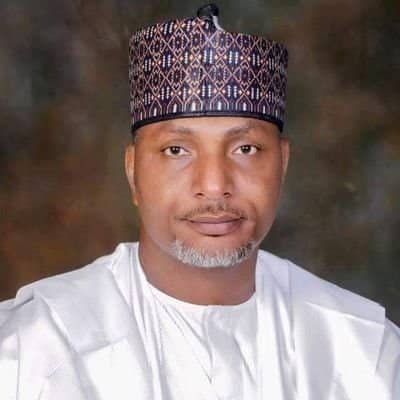
it was a disturbing display of political decay. The National Vice Chairman (North East) of the All Progressives Congress (APC), Salihu Mustafa, was violently attacked by fellow party members—not for wrongdoing, but for his refusal to openly praise President Bola Tinubu or endorse Vice President Kashim Shettima.
This assault, carried out by party elites and not aggrieved citizens, demanded security intervention to prevent further harm. It served as a grim reflection of how internal dissent is treated even at the highest levels of the ruling party. If such hostility is directed at leaders within the APC, one must ask: what awaits average Nigerians who dare to question the status quo?
The APC, once born out of widespread dissatisfaction with the impunity of the former ruling People’s Democratic Party (PDP), promised a new era of progressive governance. It presented itself as a beacon of hope, formed to challenge complacency and restore accountability. But today, that promise appears shattered.
The APC now exhibits the very excesses it once condemned—centralized power, intolerance, and a betrayal of democratic values. The Tinubu presidency, under the shadow of the infamous “emi lokan” mantra, represents an aggressive consolidation of power and the hijacking of state structures for personal and political gain.
The Gombe incident is not an isolated misstep, it is a symptom of a broader authoritarian drift and an indictment of the ruling party’s internal culture. The physical assault on Mustafa was less about an individual failing and more a manifestation of institutional rot.
When political neutrality provokes violence, the space for internal democracy collapses. If a high-ranking official is not immune from such brutality, where does that leave the everyday Nigerian who dares to challenge poor leadership?
More alarming is the emerging political culture around President Tinubu, where blind loyalty is rewarded, and dissent is crushed. This administration’s style of governance—marked by exclusion, favouritism, and retaliatory politics—risks deepening regional alienation, especially in the North, which was instrumental in Tinubu’s electoral victory. When leadership becomes transactional, when regions are reduced to political pawns, resentment builds.
That resentment, if left to fester, breeds mistrust and can ultimately trigger calls for separation outcomes Nigeria knows all too well from its troubled past.
History is filled with reminders of Nigeria’s flirtations with democracy, only to be betrayed by elite manipulation from the annulment of the June 12, 1993 election to the military’s deceptive “transition programs.” Today’s government appears to be treading a similar path, using the state’s power to crush opposition and silence dissenting voices.
This includes targeted media narratives, weaponized anti-corruption efforts, and the systematic dismantling of political rivals. These tactics don’t just suppress democratic competition—they erode the very intellectual and moral fabric needed for visionary leadership. In their place rise political opportunists—figures like the “Wikes” and sycophantic “Comrades”—more interested in proximity to power than public service.
Also troubling is the mass defection of opposition figures to the ruling party. This is not a reflection of ideological realignment, but of opportunism at its worst. Defections motivated by intimidation or incentives do not strengthen democracy; they weaken it.
A democracy without a strong, principled opposition is merely a chorus of conformity an echo chamber where loyalty trumps merit, and mediocrity replaces accountability.
True democratic societies thrive on debate, opposition, and diverse perspectives. When these values are sacrificed on the altar of political expediency, governance becomes hollow.
The Tinubu administration’s absorption of defectors is not a display of political dominance .it is a confession of systemic failure and ideological bankruptcy. It reinforces a dangerous belief that politics is not about public service, but about personal gain.
What we witnessed in Gombe and the broader political atmosphere signals a deeper crisis—not only within the APC, but across Nigeria’s entire political spectrum.
The decline of internal party democracy, the use of violence to settle disputes, and the marginalization of principled voices are all signs that our democratic foundations are weakening.
The responsibility to safeguard Nigeria’s democracy lies with all of us. Civil society, intellectuals, political leaders, and the citizenry must rise to the challenge. We must restore a culture of constructive disagreement, rebuild independent institutions, and ensure political loyalty does not eclipse ideological commitment. National offices must not become tokens of patronage, nor should violence become a tool of political discipline.
President Tinubu and the APC must understand that history does not favour rulers who govern through fear and exclusion. Legacies are defined not by how effectively dissent is suppressed, but by how courageously diverse voices are embraced. It is not too late to reverse course. But if this administration continues on its current path, the bonds holding Nigeria together already strained—may snap.
General Ibrahim Babangida once famously said that democracy can be “dribbled.” But even the most skillful dribbler eventually reaches the touchline.
If urgent steps are not taken to return Nigeria to a path of inclusive and accountable governance, the outcome may not be renewal it may be rupture.
