
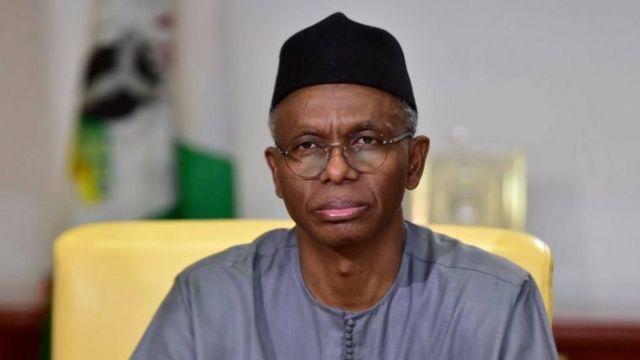
Bashir El-Rufai Sparks Outrage with Controversial Tweet Suggesting People Must Die for Nigeria’s Progress
Bashir El-Rufai, son of former Kaduna State Governor Nasir El-Rufai, is facing heavy criticism on social media after making a controversial statement implying that Nigeria’s greatness can only be achieved through the death of certain individuals.
In a tweet shared Friday via his official X (formerly Twitter) account, Bashir wrote:
“Nigeria can become great again. Unfortunately or fortunately (depending on context) a few certain people have to kpai (die) to achieve this dream.”
The post triggered immediate backlash from Nigerians who described the statement as inciteful, reckless, and suggestive of a dangerous mindset. Many users expressed concern that such rhetoric promotes political violence and undermines democratic values.
One user responded, “Hand over your dear dad, he’s part of the system that brought us here. But I’m sure you can’t because you’re already following in his footsteps.”
Attempting to defend his remarks, Bashir tweeted that he often disagrees with his father’s views, stating:
“Anyone that knows me knows I wholeheartedly acknowledge his flaws. Furthermore, I often disagree with many of his views. That is the sort of family I was raised in.”
But the clarification did little to calm the storm. Critics continued to question whether Bashir would be willing to include his father—accused of political and financial misconduct—in the list of individuals he suggested should “kpai” for the nation to thrive.
An X user wrote: “If you truly acknowledge his flaws, are you willing to sacrifice him for the betterment of the country?”
Others mocked and condemned the statement outright.
“Your dad is leading this one. Definitely the first that needs to make way for a new Nigeria,” wrote one respondent.
“Son of terrorist, bred by chaos, mentored by bloodshed, now tweeting like a saint,” another added.
“So you’re wishing death on your father? I’m shaking right now,” commented another user.
While some acknowledged Bashir’s contributions as a legislator, many urged him to exercise more caution in his public communication.
“This is a reckless statement,” one user warned. “You should know how volatile this country is. People will interpret this in dangerous ways.”
Critics also revisited the legacy of his father, Nasir El-Rufai, whose time as Kaduna State Governor (2015–2023) was marked by alleged corruption, religious tension, and political divisiveness.
In April 2025, the Kaduna State House of Assembly launched a probe into El-Rufai’s administration, citing ₦432 billion in suspected misappropriated funds. He responded by suing the Assembly, defending his record.
His tenure also saw ongoing ethno-religious conflict, especially in Southern Kaduna, with critics accusing his administration of worsening tensions.
El-Rufai’s successor, Governor Uba Sani, has since claimed significant progress in ending the region’s crisis through policies of inclusion and justice.
Despite the storm surrounding Bashir’s tweet, the conversation has spotlighted public frustration with Nigeria’s political elite and revived calls for accountability across all levels of leadership.
