
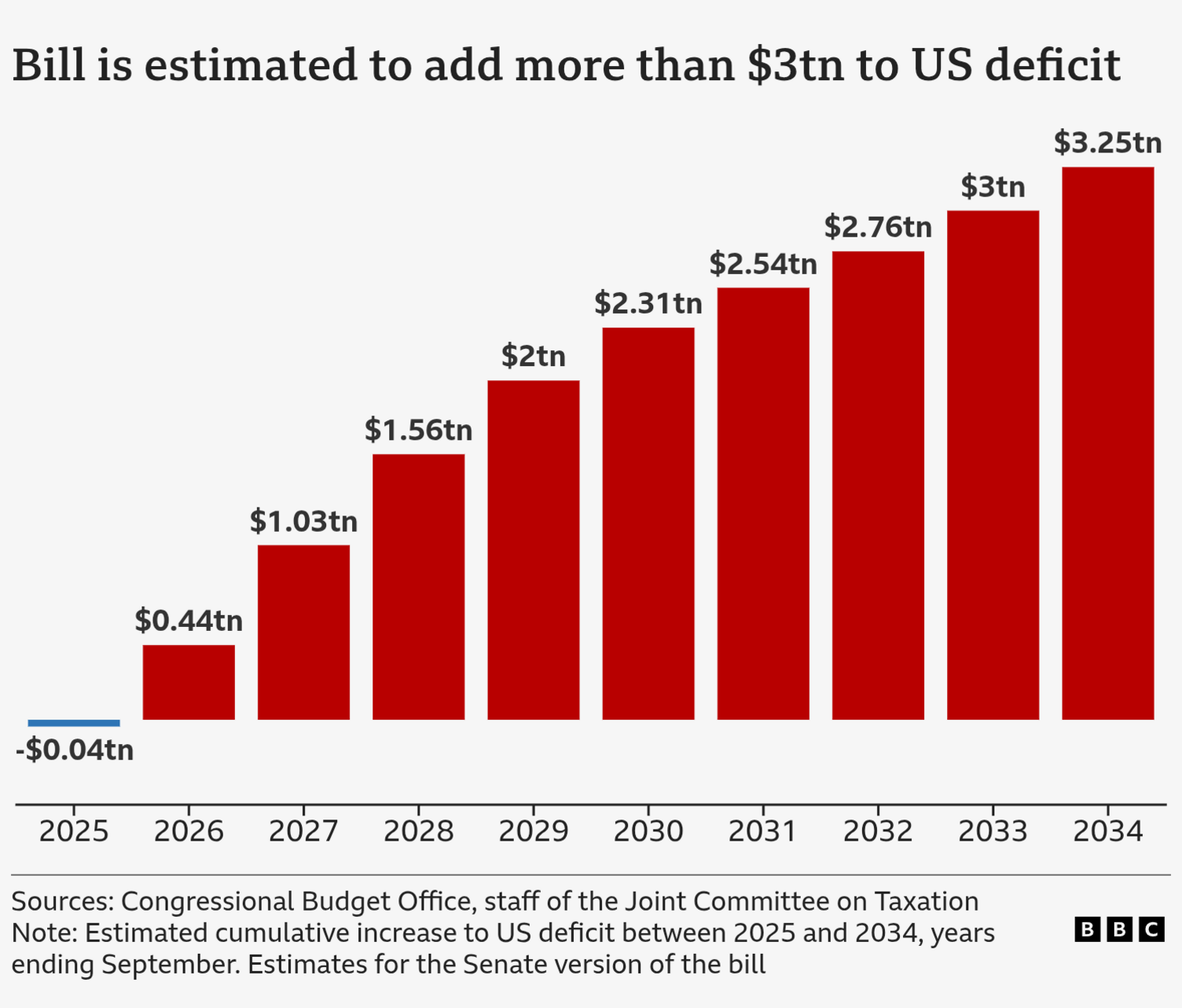
Bill Adding $3.3 Trillion to Federal Deficit Sparks Debate Ahead of 2026 Midterms
A recently passed federal budget and tax bill is projected to increase the national deficit by approximately $3.3 trillion, igniting intense debate over its long-term fiscal consequences.
The legislation which extends key tax cuts and includes significant spending adjustments has drawn mixed reactions from lawmakers and analysts.
Supporters among Republicans praise the bill’s economic relief measures, including front-loaded tax benefits aimed at stimulating growth and providing immediate financial support to households and businesses.
However deficit hawks and fiscal conservatives have sharply criticized the bill warning that the substantial increase in federal borrowing could jeopardize economic stability.
According to analysts, while the upfront tax incentives may garner voter approval in the short term. the bill’s deeper cuts to social programs such as Medicaid and food assistance could provoke public backlash as the 2026 midterm elections approach.
The Congressional Budget Office (CBO) estimates that federal spending on mandatory programs and interest on the national debt continues to outpace revenue growth, contributing to the widening deficit.
Recent data shows the fiscal year 2025 deficit has already reached historic levels, with the CBO projecting a total deficit near $1.9 trillion, the third highest in American history.
Increased outlays for Social Security, Medicare and interest payments on the public debt have been major drivers of spending growth, while revenues have only modestly increased.
Fiscal experts caution that without measures to curb spending or increase revenues, the ballooning deficit could lead to higher interest costs and constrain future government flexibility.
The debate over balancing economic stimulus with fiscal responsibility remains a central issue as lawmakers prepare for the upcoming election cycle.
