
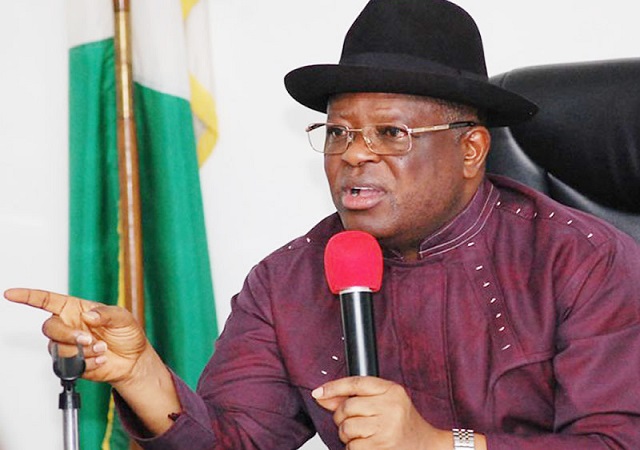
David Umahi Urges South-East to Support President Tinubu in 2027, Citing Infrastructure Development
The Minister of Works and former Governor of Ebonyi State, David Umahi, has called on the South-East region to set aside any presidential ambitions in the 2027 general elections and instead rally behind President Bola Ahmed Tinubu’s re-election bid.
In a statement issued on Monday, Umahi stressed the importance of political unity and strategic cooperation, especially for regions seeking greater inclusion in national leadership. He noted that President Tinubu has demonstrated fairness in governance, pointing to infrastructure projects that have been distributed across all geopolitical zones, including the South-East.
According to Umahi, many long-abandoned roads and bridges in the region have been revived under Tinubu’s administration, marking a shift from the neglect the area experienced under past governments. He credited the President with being committed to nation-building and fostering development through tangible investments.
To enhance transparency and public trust, Umahi revealed that he has directed all zonal directors in the Federal Ministry of Works to visit both ongoing and inherited projects within their regions. This, he said, would allow Nigerians to see firsthand the progress being made, countering what he described as misleading claims by opposition figures and online critics.
He further cautioned South-East politicians against making political decisions based on emotions, ethnicity, or past grievances. Umahi emphasized that the road to producing a Nigerian president from the region lies in building strong alliances and demonstrating political maturity, not in isolation or confrontation.
In a bold declaration, the minister stated that President Tinubu deserves at least 90% of the South-East vote in 2027. Such support, he said, would not only strengthen the region’s influence at the national level but also ensure continued federal investment in the zone. He warned that being politically divided or out of step with national interests could cost the South-East dearly in terms of relevance and representation.
Umahi highlighted the administration’s focus on projects such as road reconstruction, bridge rehabilitation, and rural infrastructure upgrades as part of a broader national agenda to promote unity and close development gaps across the country.
He concluded by urging South-East leaders and stakeholders to unite, reminding them that political gains are secured through collaboration, not internal rivalry. Only through unity, he said, can the region position itself for future leadership roles within the Nigerian federation.
