
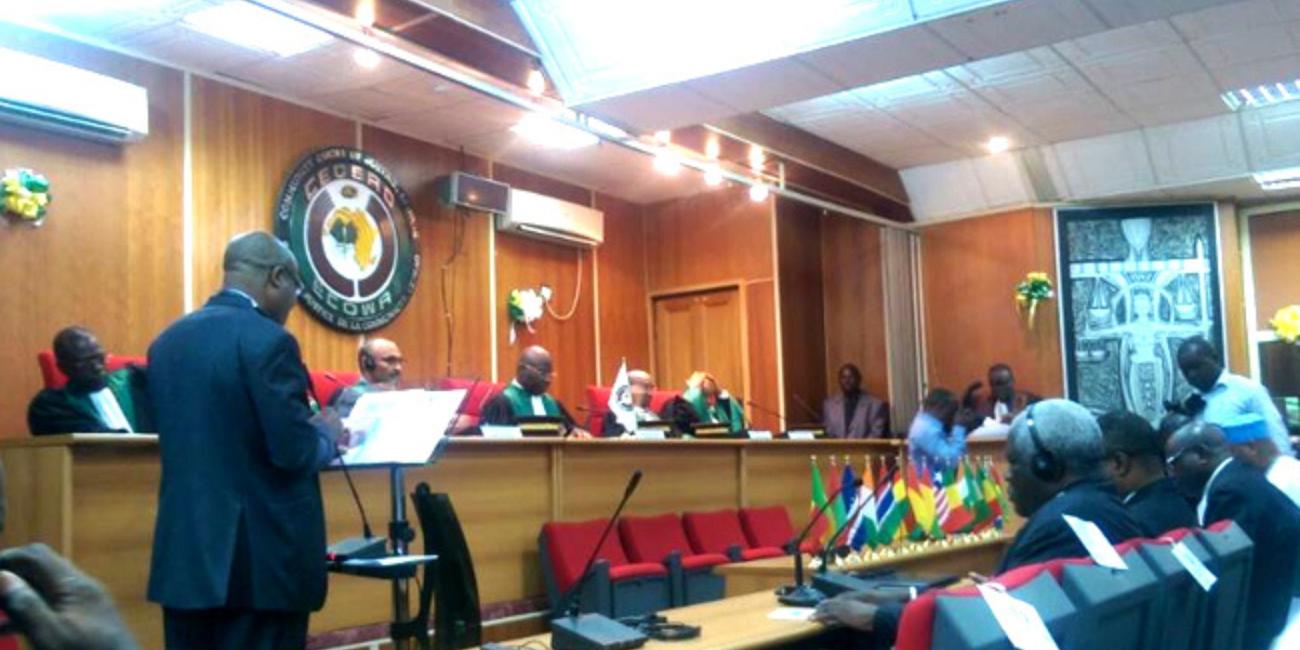
Death Row Inmate Drags Nigerian Government to ECOWAS Court Over Alleged Unlawful Conviction and Rights Violations.
A high-stakes human rights case has emerged at the ECOWAS Court in Abuja as Orikri Rhahor, a Nigerian death row inmate, challenges the legitimacy of his conviction and death sentence handed down by a Delta State High Court.
In Suit No: ECW/CCJ/APP/34/25, filed on July 17, 2025, Rhahor is seeking justice for what he describes as a gross violation of his fundamental human rights. His legal counsel, Andrew N. Elekeokwuri, argues that the trial process was deeply flawed, lacking fair hearing standards and proper legal representation.
Rhahor was sentenced to death by hanging on July 10, 2024, by Justice Michael Nduka Obi after being found guilty in Charge No. EHC/35C/2020. However, the judge’s statement that the “defence rested on the case of the prosecution” has sparked controversy.
Legal experts suggest this implies the verdict was based solely on the prosecution’s narrative, without due consideration of the defendant’s side or presentation of any defence.
The defendant’s lawyer failed to call witnesses or cross-examine the prosecution, which Rhahor claims amounted to ineffective legal representation, violating his right to a fair trial as protected by both Nigerian and international human rights laws.
The Nigerian government has been served notice through the Attorney-General’s office and must respond within 30 days or risk judgment being entered against it by default.
Legal analysts warn that if the ECOWAS Court rules in Rhahor’s favor, it could trigger significant scrutiny of Nigeria’s criminal justice system, especially in how it handles capital punishment cases. It may also set a major precedent for regional accountability, reinforcing the ECOWAS Court’s authority in protecting human rights when domestic justice systems fall short.
As the court prepares to hear the case, many see this as one of the most consequential human rights battles of the year.
