
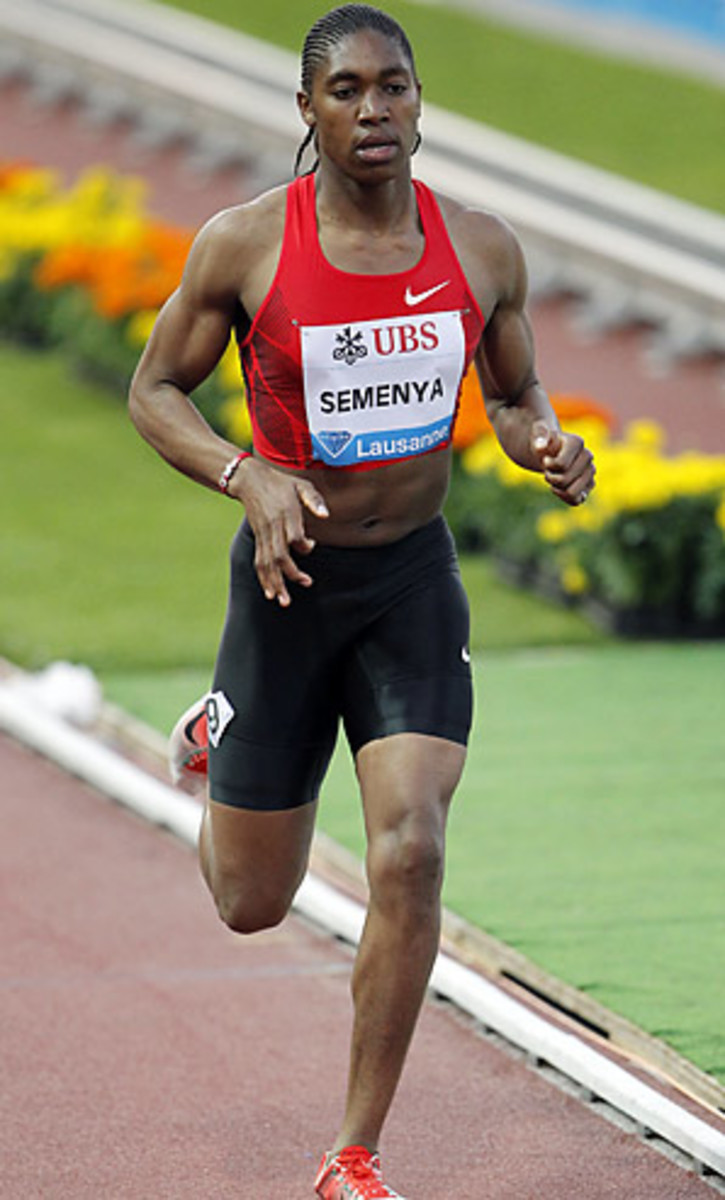
European Court Rules Caster Semenya Was Denied Fair Trial in Gender Testing Dispute
The European Court of Human Rights (ECHR) has ruled that South African Olympic champion Caster Semenya was not granted a fair trial by the Swiss legal system in her long-standing battle over gender testing regulations in athletics.
Semenya, a two-time Olympic gold medalist in the women’s 800 meters, has been barred from competing in her preferred event since 2018 due to World Athletics’ regulations requiring athletes with differences in sexual development (DSD) to medically reduce their testosterone levels.
Although the ECHR did not uphold Semenya’s claim of discrimination declaring it inadmissible as it fell outside the court’s jurisdiction over Switzerland the court’s Grand Chamber determined that her right to a fair trial was violated.
The Strasbourg-based court criticized the Swiss Federal Court for failing to conduct the “rigorous judicial review” warranted by the seriousness of the case, noting that Semenya was not afforded the full protections outlined under the European Convention on Human Rights.
As part of the ruling, Switzerland was ordered to pay Semenya €80,000 to cover legal costs.
This decision marks another chapter in Semenya’s ongoing legal struggle. In 2019, the Court of Arbitration for Sport (CAS) ruled against her, validating World Athletics’ stance that elevated testosterone levels gave DSD athletes an “unfair advantage” in women’s competitions. That ruling was subsequently upheld by the Swiss Federal Court in 2020.
In a previous 2023 judgment, the ECHR had found that Semenya had indeed been a victim of discrimination, though that ruling did not overturn the regulations or reinstate her eligibility to compete without medication.
Thursday’s ruling by the Grand Chamber, the ECHR’s highest body, was in response to an appeal by Swiss authorities supported by World Athletics.
Despite the outcome, the legal decision does not alter the status quo regarding World Athletics’ testosterone policy or reinstate Semenya’s right to compete. However, it adds further weight to global criticism over the treatment of DSD athletes and the legal frameworks that support their exclusion.
