
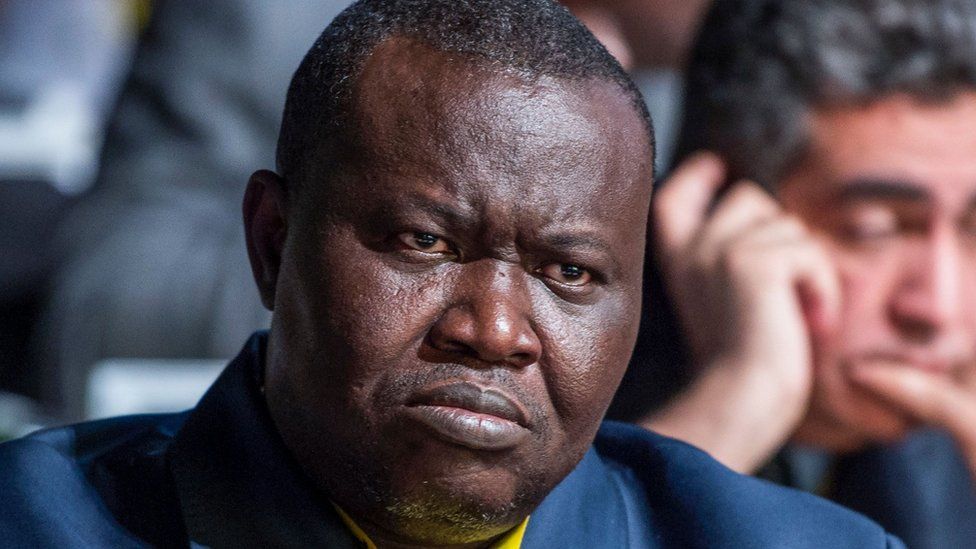
Ex-Central African Football Chief Jailed for War Crimes, Crimes Against Humanity by ICC
Patrice-Edouard Ngaïssona, former head of the Central African Republic (CAR) football federation and ex-executive committee member of the Confederation of African Football (CAF), has been sentenced to 12 years in prison by the International Criminal Court (ICC) for war crimes and crimes against humanity. Alongside him, former lawmaker and militia commander Alfred Yekatom, also known as “Rambo,” was handed a 15-year sentence.
The ICC judges found Ngaïssona guilty of 28 charges, and Yekatom guilty of 20, including murder, torture, and religious persecution targeting Muslims during the 2013–2014 sectarian violence in CAR. The convictions followed a nearly four-year trial that featured testimony from more than 170 witnesses and nearly 20,000 pieces of evidence.
Both men were leaders of the anti-Balaka militias, Christian-dominated armed groups formed to counter the Muslim-majority Séléka rebels after the ousting of President François Bozizé. Prosecutors detailed how Ngaïssona, as the political coordinator of anti-Balaka forces, provided funding and strategic direction, while Yekatom led brutal attacks, including the infamous December 2013 assault on Bangui, where civilians were murdered in cold blood.
Yekatom’s fighters were reportedly ordered to slit throats, mutilate bodies, and bury victims alive. Despite denying all charges during the trial, the court held both accountable for orchestrating a campaign of terror that resulted in mass civilian casualties and displacement.
Ngaïssona, who also briefly served as CAR’s sports minister, was arrested in France in 2018 and transferred to The Hague in 2019. His controversial election to CAF’s executive committee in 2018 drew strong condemnation from rights groups.
Yekatom, previously elected as an MP despite being under UN sanctions, was arrested after firing a gun in parliament in 2018. His extradition marked the first from CAR to the ICC, signifying a step towards justice and accountability, according to international human rights observers.
The ICC verdict underscores a significant milestone in efforts to address impunity in Central African Republic’s prolonged conflict.
