
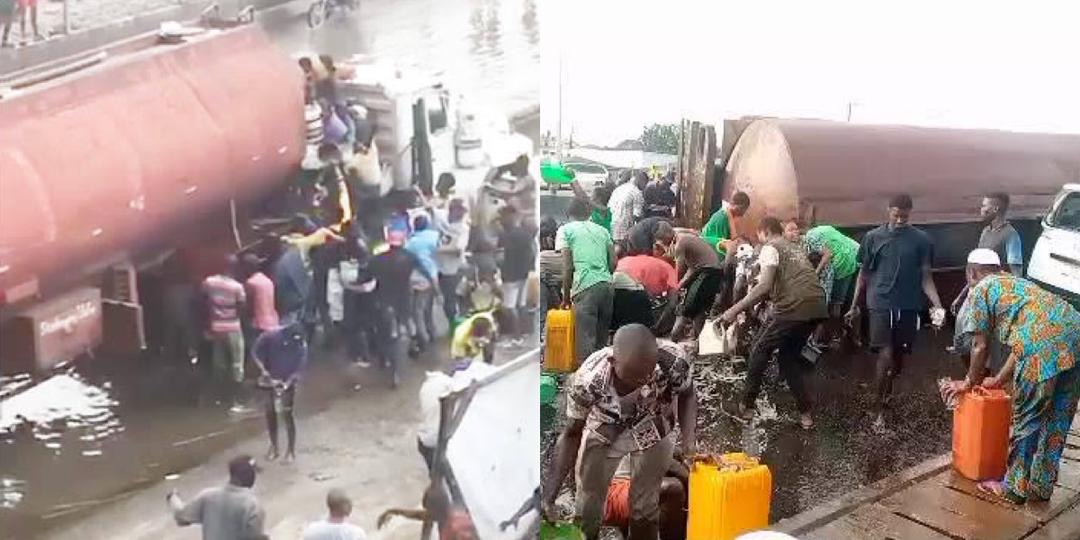
FRSC: 411 Nigerians Died in 2024 While Scooping Fuel from Fallen Tankers
The Federal Road Safety Corps (FRSC) has revealed that over 411 Nigerians lost their lives in 2024 while attempting to scoop fuel from fallen tankers.
This was disclosed by the Benue State Sector Commander of FRSC, Steve Ayodele, during a town hall meeting with trailer and tanker drivers in Makurdi, aimed at curbing road crashes and fuel-related tragedies.
Ayodele explained that the deaths accounted for 7.6% of total road traffic fatalities recorded nationwide in 2024, describing the practice as “tragic, reckless, and avoidable.”
“Fuel scooping has become one of the deadliest practices on Nigerian roads. Instead of recognising spilt fuel as danger, many rush to collect it. Sadly, this reckless act has cost hundreds of lives and destroyed property,” he said.
The FRSC chief added that tanker explosions not only result in severe burns and loss of life but also destroy shops, vehicles, and nearby infrastructure, plunging victims’ families into economic hardship.
He further identified reckless driving, traffic rule violations, roadside trading near crash-prone areas, and unsafe conduct at accident scenes as factors worsening the crisis.
Also speaking at the event, Babalola Sheba, Head of Operations at the Nigerian Midstream and Downstream Petroleum Regulatory Authority (NMDPRA), highlighted the environmental and health risks of fuel scooping.
He noted that fuel spills contaminate soil, water, and air, while prolonged exposure to fumes could trigger respiratory illnesses and skin diseases.
Sheba added that new safety measures have been introduced, including compulsory anti-spill valves, speed limiters on tankers, and a colour-coding system to differentiate petroleum products.
On his part, Emmanuel Ogbanje, State Coordinator of the Computerised Vehicle Inspection Service, stressed the importance of regular vehicle checks, strict adherence to axle load regulations, and compliance with traffic laws.
“Safety is not a one-time goal but a continuous process,” Ogbanje said, urging drivers to maintain valid licences, avoid overloading, and report unsafe practices.
Stakeholders at the meeting agreed that stronger public awareness and collaboration were needed to curb fuel scooping and improve road safety across Nigeria.
