
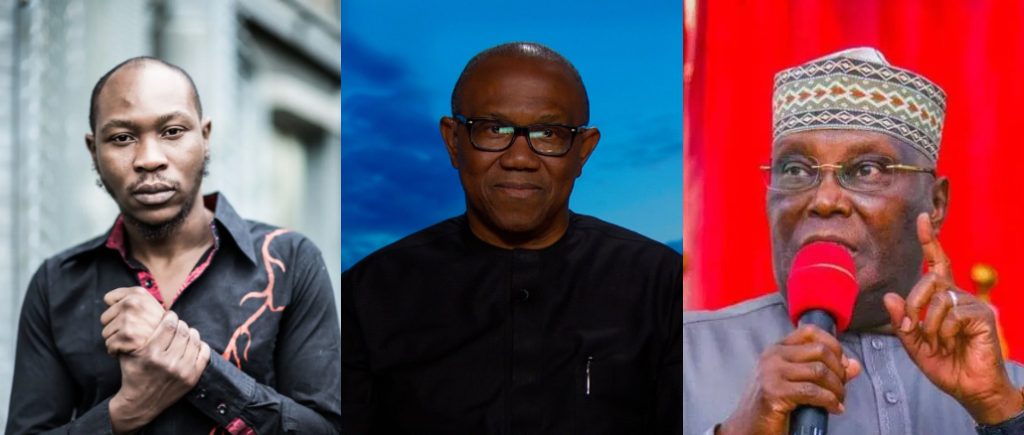
“Just Another Power Grab”: Seun Kuti Criticizes Peter Obi for Political Alliance with Atiku Abubakar
Renowned Afrobeat singer and political commentator, Seun Kuti, has openly criticized former Labour Party (LP) presidential candidate, Peter Obi, over his recent alliance with ex-PDP presidential aspirant, Atiku Abubakar.
The duo has now joined forces under the banner of the African Democratic Congress (ADC) a surprising political shift that has generated nationwide debate and sparked reactions across social media platforms.
According to reports, this new alliance is drawing support from some influential figures even within the ruling All Progressives Congress (APC), led by President Bola Tinubu.
In the 2023 presidential elections, Tinubu secured only 37% of the total vote, with Atiku and Obi earning 29% and 25% respectively numbers that highlighted deep divisions within Nigeria’s opposition.
Obi’s decision to leave the PDP before the last elections was reportedly due to Atiku clinching the party’s ticket. Now, their renewed partnership under the ADC has raised eyebrows, with critics questioning its credibility and motives.
During an Instagram Live session, Seun Kuti labeled the alliance as “just another power grab,” asserting that both men were only interested in political power rather than real change. He did not hold back in his criticism of the Obidients Peter Obi’s once-passionate supporter base suggesting that their influence had significantly waned.
“Now that Peter Obi has gone back home to Atiku, I don’t need to say anything more about the Obidients,” Seun said mockingly.
@weightloss_abuja: “Peter Obi is the air they breathe.”
@dj.iceberg_official: “Is Obi the only politician in Nigeria? Why always him?”
@sylvestervs.ojukwu.5: “Seun should channel this energy to hold Tinubu accountable, not Obi.”
@taste_ena: “This is disappointing. Peter Obi may not be perfect, but he’s a step forward.”
Others, however, supported Seun’s perspective, applauding him for speaking up about what they see as another example of opportunistic politics.
The development marks a significant moment in Nigeria’s post-election landscape, fueling debate about opposition unity, the future of youth-led political movements, and the credibility of old political alliances dressed in new clothing.
As Nigerian politics continues to evolve, many await to see how this alliance will shape the coming years and whether voters will buy into the rebranded union of two former rivals.
