
Nigeria Secures $747 Million Loan for Lagos-Calabar Coastal Highway Project
The Federal Government of Nigeria has secured a $747 million syndicated loan to finance Phase 1, Section 1 of the ambitious Lagos-Calabar Coastal Highway, signalling renewed global confidence in the country’s infrastructure development drive.
According to a statement signed by Mohammed Manga, Director of Information and Public Relations, the funding arrangement was led by Deutsche Bank, which served as the Global Coordinator, Initial Mandated Lead Arranger, and Bookrunner.
The loan marks Nigeria’s largest syndicated infrastructure facility of its kind and involves a mix of regional and international lenders.
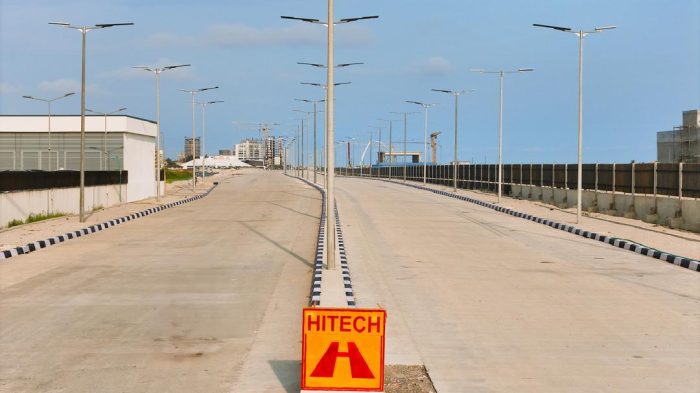
Phase 1, Section 1 of the project spans from Victoria Island to Eleko Village in Lagos. The highway is being constructed using Continuously Reinforced Concrete Pavement (CRCP), designed for a minimum lifespan of 50 years with minimal maintenance an approach praised for its long-term resilience and cost-efficiency.
The Ministry of Works emphasized that the financing structure a blend of Engineering, Procurement, and Construction plus Financing (EPC+F) reflects a strategic public-private partnership aimed at accelerating delivery and unlocking private capital for national infrastructure.
The lending consortium includes top institutions such as the Islamic Corporation for the Insurance of Investment and Export Credit (ICIEC), African Export-Import Bank (Afrexim), Abu Dhabi Exports Office (ADEX), ECOWAS Bank for Investment and Development (EBID), Nexent Bank N.V., and Zenith Bank’s UK, Paris, and Nigeria branches. First Abu Dhabi Bank is also serving as Agent and Intercreditor Agent across all facilities.
Construction is already over 70% complete, with Hitech Construction Company executing the project. The road has undergone comprehensive technical, legal, environmental, and social assessments to meet global standards.
Minister of Finance and Coordinating Minister of the Economy, Mr. Wale Edun, described the deal as a significant milestone:
“This financing reflects the success of Nigeria’s macroeconomic reforms and the return of global capital in support of our development. It is a model of how sustainable and transparent infrastructure financing should work.”
He added that the loan showcases President Bola Tinubu’s commitment to deepening private sector involvement in infrastructure through public-private partnerships, ultimately driving inclusive growth and positioning Nigeria for broader economic transformation.
