
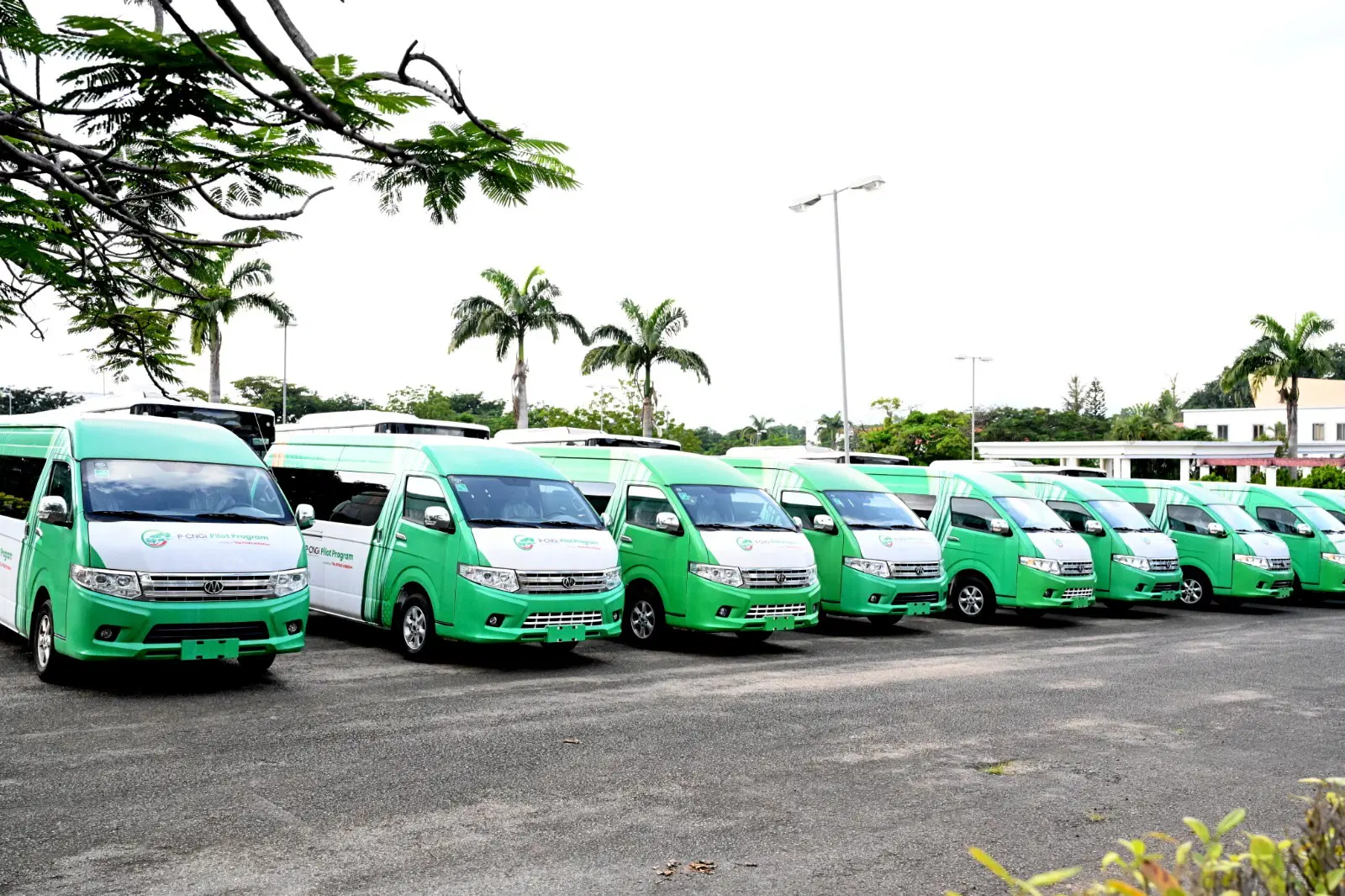
Nigeria Surpasses 100,000 Vehicles Running on Compressed Natural Gas Targets 1 Million by 2027
Nigeria’s adoption of Compressed Natural Gas (CNG) as a vehicle fuel has reached a significant milestone, with over 100,000 vehicles currently running on CNG across the country.
This surge is driven primarily by government-backed incentives, concessional pricing, and expanding infrastructure under the Presidential Compressed Natural Gas Initiative (PCNGI).
The government aims to escalate this number dramatically, targeting one million CNG-powered vehicles by 2027 as part of broader efforts to accelerate energy transition and reduce greenhouse gas emissions. The initiative seeks to position CNG as a cheaper, cleaner and more sustainable alternative to petrol and diesel, contributing to Nigeria’s climate goals and economic diversification.
As of early 2025, the CNG sector in Nigeria has expanded rapidly. The country now has around 27 mother compression stations, 63 daughter refuelling outlets and 242 certified vehicle conversion centres.
These facilities primarily serve commercial vehicle operators such as taxis, buses and tricycles, although the use of CNG is gradually gaining traction among private vehicle owners.
The rapid increase in conversions is attributed to various government measures, including concessionary gas pricing that makes CNG significantly cheaper than petrol, free or subsidised vehicle conversion kits, and tariff waivers on CNG equipment imports.
The Nigerian Midstream and Downstream Petroleum Regulatory Authority (NMDPRA) and the PCNGI have also collaborated to expand the number of conversion centres from just seven in 2023 to over 190 by the end of 2024.
Despite substantial progress, challenges remain. Infrastructure coverage is uneven, with northern and southeastern regions lagging due to poor pipeline access and higher distribution costs. Conversion costs limited refuelling networks and consumer awareness also restrict faster adoption.
However ongoing investments and government-backed initiatives like the Midstream and Downstream Gas Infrastructure Fund (MDGIF) are expected to address these barriers.
Michael Oluwagbemi Programme Director of PCNGI emphasized that the initiative’s role is primarily to incentivize and enable private sector participation recognizing that the government alone cannot meet all conversion targets.
He noted that private vehicle conversions currently outnumber government-supported ones by two to three times highlighting strong market demand.
With global attention on sustainable energy and Nigeria’s own push to reduce emissions and improve air quality, CNG expansion stands as a strategic pillar in the country’s energy future.
