
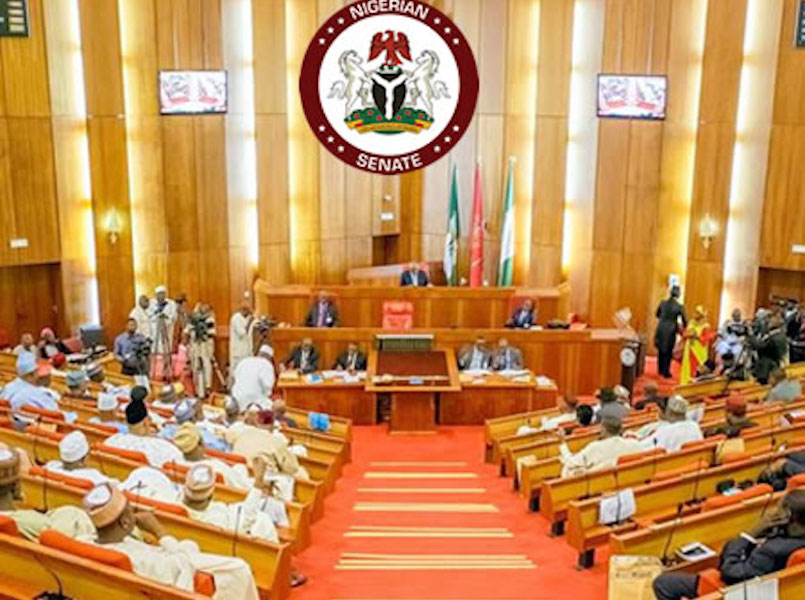
Nigerian Senate Approves President Tinubu’s $21 Billion Foreign Loan Request Amid Mixed Reactions
The Nigerian Senate has approved President Bola Tinubu’s major foreign loan request, authorizing over $21 billion in external borrowing for the 2025–2026 fiscal period amid mixed political reactions.
The comprehensive borrowing plan includes $21.5 billion in foreign loans, €2.2 billion, 15 billion Japanese Yen, a €65 million grant, and a ₦757 billion domestic bond issuance intended to settle pension liabilities.
The approval was based on the Senate Committee on Local and Foreign Debts’ report, chaired by Senator Aliyu Wamakko, which highlighted that the loans come with concessional terms featuring low interest rates and extended repayment windows.
The loans are part of the government’s Medium-Term Expenditure Framework (MTEF) and Fiscal Strategy Paper (FSP), designed to finance critical sectors such as infrastructure, education, health, water supply, and agriculture.
President Tinubu, in his letter to the Senate, emphasized the necessity of the loans to bridge Nigeria’s infrastructure gap, generate jobs and stabilize essential sectors.
However the timing has sparked significant debate nationally as some critics express concern over Nigeria’s already high public debt burden which has exceeded $100 billion and a debt servicing rate consuming over 90% of federal revenue. Opposition senators warned that the loans might impose financial burdens on future generations without clear repayment plans.
Defenders of the borrowing plan, including members of the Senate’s finance committee, argue that these loans are strategic investments designed to stimulate economic growth and foreign exchange inflows rather than reckless borrowing.
They stress that the favorable loan terms and thematic focus on growth-oriented sectors differentiate this borrowing cycle from past experiences.
Additionally, the Senate approved a novel $2 billion Foreign Currency Denominated Issuance Programme aimed at mobilizing foreign currency liquidity through Nigeria’s domestic debt market, marking an innovative approach in debt management.
The approval underscores urgent government efforts to address Nigeria’s economic challenges through increased borrowing despite heightened concerns from economists civil society groups and some lawmakers about long-term fiscal sustainability amid soaring debt levels.
