
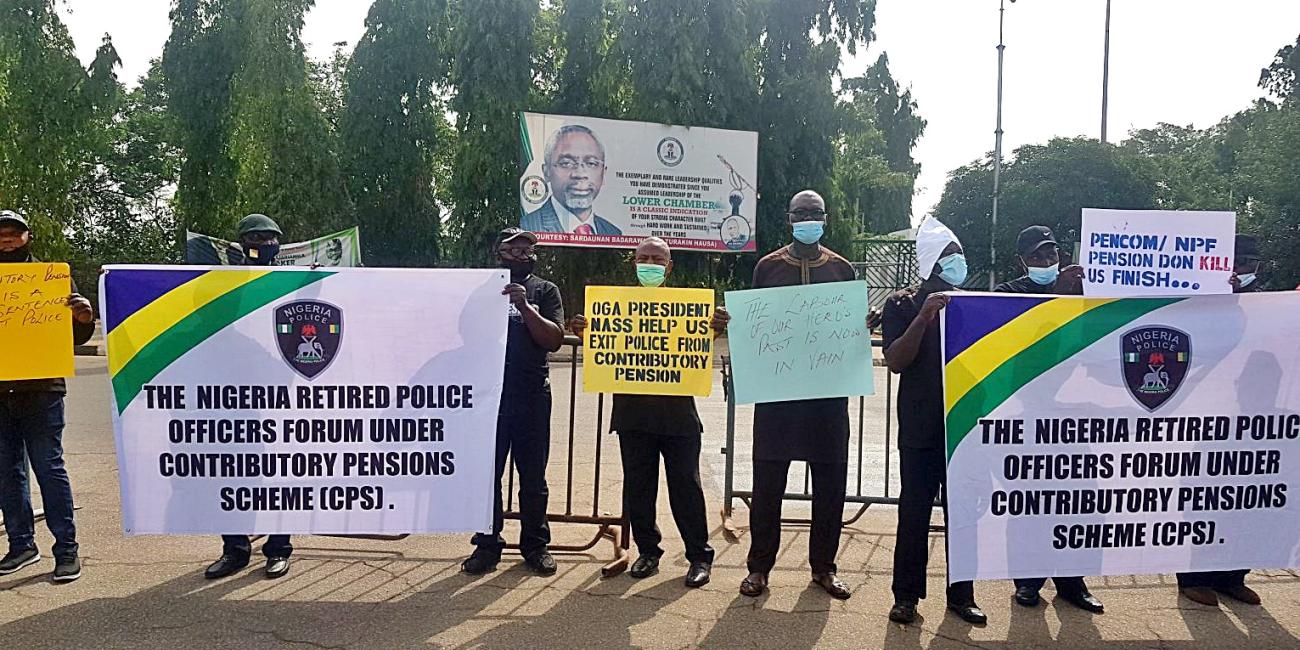
Police Retirees Dying in Penury as Pension System Crumbles — RULAAC Demands Urgent Reforms
A human rights group, the Rule of Law and Accountability Advocacy Centre (RULAAC), has called on the National Assembly and the Presidency to urgently investigate and reform Nigeria’s troubled police pension system, describing it as a “moral emergency.”
The Rule of Law and Accountability Advocacy Centre (RULAAC) has raised alarm over the deteriorating conditions faced by retired Nigerian police officers, many of whom are reportedly dying in penury due to unpaid entitlements and a failed pension system.
In a statement issued on Monday, RULAAC’s Executive Director, Okechukwu Nwanguma, described the current state of police pensions as a “shameful betrayal” of officers who served under dangerous and grueling conditions, only to be abandoned in retirement.
The group spotlighted the case of retired Deputy Superintendent of Police (DSP) Eneche James, who has not received any pension since retiring on June 1, 2024 more than a year ago.
“His words are a distress call a lamentation of betrayal by a country he loyally served for 35 years,” Nwanguma stated.
“He is not asking for charity, but for the return of his own savings, deducted from his salary for decades.”
Nwanguma quoted DSP Eneche’s heartbreaking words:
“If I say the truth, I will die; if I don’t say the truth, I will still die. Why don’t I say the truth before I die?”
RULAAC condemned what it described as a pattern of token responses by the Nigeria Police Force and pension managers, who often issue meager and irregular payments only after public outcry. The organization accused pension authorities of masking deep systemic failures with “perfunctory, knee-jerk gestures.”
The group stressed that DSP Eneche’s situation is not isolated. Many other retirees reportedly face similar struggles, trapped in a rigged and bureaucratic pension system plagued by delays, lack of transparency, and inadequate payouts.
Retired police officers in Nigeria, particularly those who left service after the 2004 introduction of the Contributory Pension Scheme (CPS), have long criticized the system. Under the CPS, pensions are managed by private Pension Fund Administrators (PFAs) under the oversight of the National Pension Commission (PenCom).
However, numerous complaints persist over non-payment, inefficiency, and a lack of accountability especially in the security sector. These grievances came to a head in 2021, when protests erupted nationwide over unpaid pensions, sparking promises of reform that remain largely unfulfilled.
