
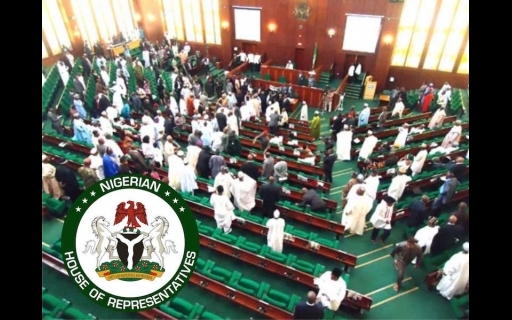
Reps Order Customs to End “Illegal” Import Levy by June 30 — Demand Full Compliance With New Customs Act
In a bold legislative move, the House of Representatives has ordered the Nigeria Customs Service (NCS) to halt the controversial 1% Comprehensive Import Supervision Scheme (CISS) levy by June 30, 2025, declaring it illegal and unsupported by any existing Nigerian law.
This directive was issued during the 2025 budget defence and review of the NCS’s 2024 performance, which showed a revenue generation of ₦6.11 trillion, surpassing its ₦5.08 trillion target by over ₦1 trillion.
Leading the charge, Hon. Leke Abejide, Chairman of the House Committee on Customs and Excise, stated unequivocally that the CISS levy is not recognized in the Laws of the Federation and that continued collection beyond June will be met with legal action.
“You must stop collecting the 1% CISS by the end of this month. You are only authorized by law to collect the 4% Free-On-Board levy as provided in Section 18(1a) of the Nigeria Customs Service Act, 2023,” Abejide emphasized.
He also criticized the Service for its inability to fully fund personnel, overhead, and capital projects, despite its impressive revenue performance. According to him, personnel and project implementation stood below 50%, with 43.53% spent on staff, 46.34% on overhead, and 45.68% on capital execution.
The Committee also questioned continued payments to Web Fountaine Ltd a company contracted to provide automation support even though over 80% of their work has reportedly been taken over internally by the NCS.
Abejide revealed that the House will hold a joint session with the Senate Committee on Customs, the Minister of Finance Wale Edun, and other stakeholders to discuss these issues and enforce compliance.
The legality of the CISS came under fire when Rep. Awaji-Inombek Abiante (Rivers) argued that it originated from military-era policies and was never codified into democratic law.
“This 1% collection is illegal. It was never passed by any National Assembly and should not be continued under a democratic government,” Abiante said.
As the June 30 deadline approaches, the NCS is now under immense pressure to align its revenue practices strictly with the laws of the land — or risk legal consequences from the nation’s lawmakers.
