
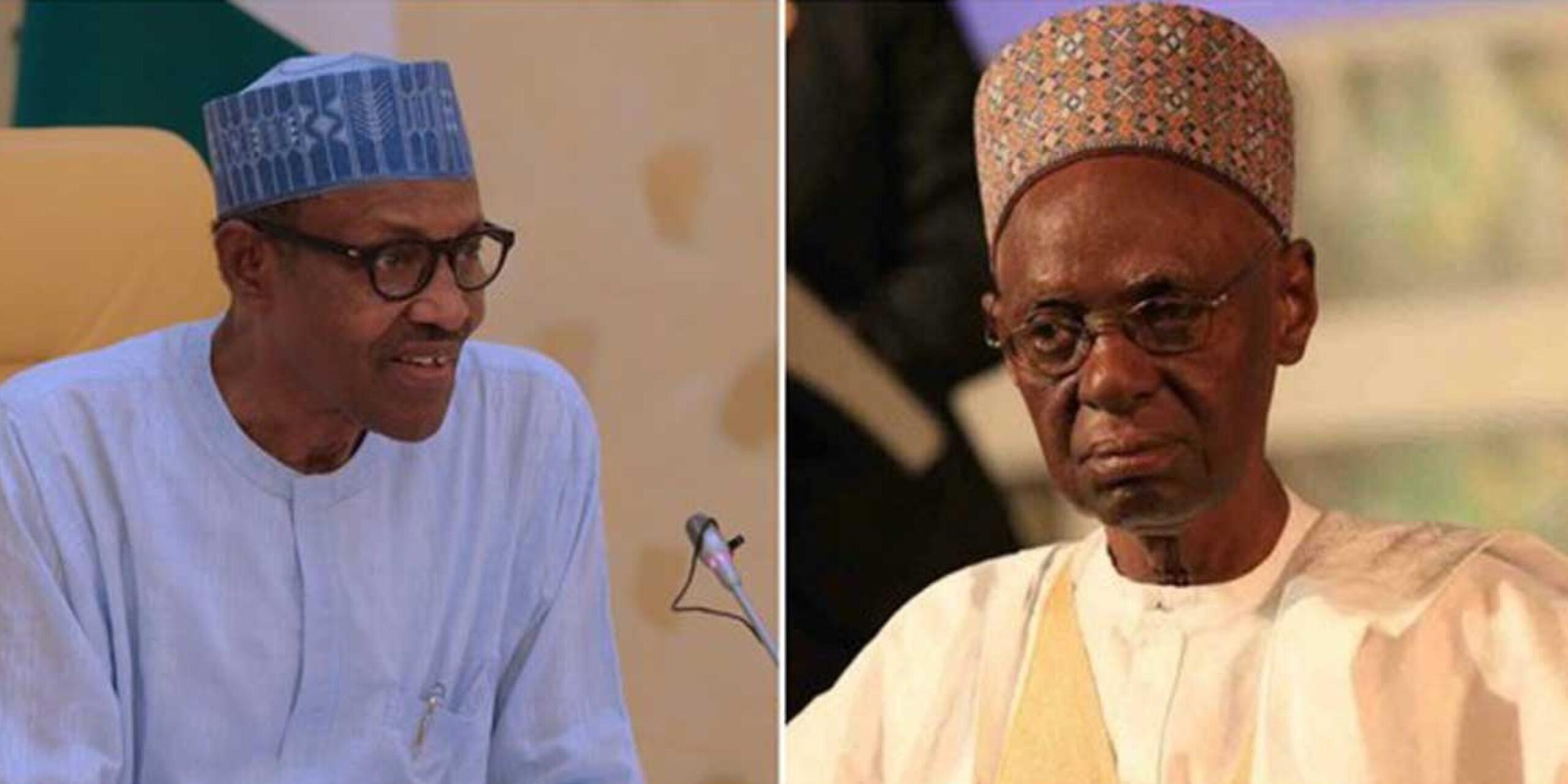
Shagari’s Grandson Criticizes Buhari Over Burial Snub, Commends Tinubu’s National Unity Gesture
Nura Muhammad Mahe, grandson of Nigeria’s first Executive President, Alhaji Shehu Shagari, has openly criticized former President Muhammadu Buhari for failing to honour his grandfather with a state burial in 2018.
This, he says, stands in sharp contrast to the dignified send-off Buhari himself received under the administration of President Bola Ahmed Tinubu.
In a strongly worded statement issued in Sokoto on Wednesday, Mahe expressed deep disappointment over what he described as a deliberate snub by Buhari.
He recalled that Shagari died on December 28, 2018, and was buried the next day with no presence from President Buhari and no state-organized honours, even though Buhari was in the country at the time.
“Instead of attending the burial personally, President Buhari sent a delegation led by the then Secretary to the Government of the Federation, Boss Mustapha,” Mahe stated. “It was a painful experience for the Shagari family and many Nigerians who expected a more fitting tribute for a man who held the nation’s highest office.”
Mahe alleged that the neglect stemmed from unresolved political grievances, saying: “Even in death, Buhari failed to show due respect to his predecessor.”
In contrast, Mahe praised President Tinubu for his respectful handling of Buhari’s own passing, highlighting his physical attendance at the funeral and the establishment of a high-powered committee to oversee the burial.
He described Tinubu’s actions as a commendable act of national unity and statesmanship, calling on future leaders to emulate such gestures.
“President Tinubu’s decision to honour his predecessor in this way sends a powerful message about the importance of unity and respect for national institutions,” Mahe said.
Shagari, who died at the age of 93 after a brief illness at the National Hospital in Abuja, served Nigeria in various ministerial roles from the 1950s through the 1970s before becoming the country’s first executive president in 1979.
Born in the village of Shagari in Sokoto State, he began his political career in 1954 when he was elected to the House of Representatives. Over the years, he held several key ministerial positions including Commerce, Internal Affairs, Works, and Finance before winning Nigeria’s first presidential election under the 1979 Constitution.
Mahe concluded his statement with prayers for all of Nigeria’s departed leaders, asserting that their legacies regardless of how controversial form a critical part of the country’s historical fabric.
