
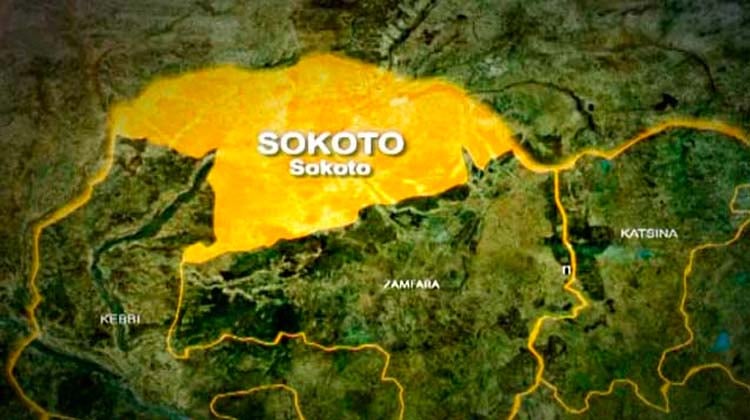
Sokoto Leaders Link Out-of-School Crisis to Poverty and Low Parental Awareness
Community leaders in Sokoto State have expressed concern over the growing number of out-of-school children, blaming widespread poverty and poor parental sensitisation as key factors fueling the crisis.
Their concerns were raised during the visit of UNICEF Country Representative, Ms. Wafa Said, to SKS Model Primary School in Yabo, where stakeholders renewed their commitment to reversing the trend.
Speaking at the event, a Yabo community leader, Muhammadu Abubakar, noted that while sermons and community campaigns consistently promote the importance of education, financial hardship continues to discourage parents from sending their children to school.
He explained that his personal efforts ensured all his children attained university education, some up to master’s level, but admitted that many families lack the means to do the same.
Also speaking, the Chairman of the School-Based Management Committee, Dan Sheu, highlighted that although many children had been successfully re-enrolled in schools, the majority still face challenges continuing beyond secondary education.
According to him, financial constraints remain the biggest obstacle, forcing many young people to abandon their studies midway. To tackle this, he revealed that the committee is introducing income-generating ventures such as gardening and small-scale enterprises to sustain education-focused interventions.
Headmaster of SKS Model Primary School, Yusuf Sharu, praised the impact of innovative teaching methods such as the “Teaching at the Right Level” approach, which he said had boosted literacy levels. He added that UNICEF’s provision of a borehole has improved hygiene within the school and supported small-scale farming activities for pupils.
UNICEF’s Country Representative, Wafa Said, lamented the number of children who still roam the streets instead of being in classrooms. She stressed that education remains a key driver of social and economic transformation, not only for Sokoto communities but for Africa as a whole.
“When children are given access to education, they not only uplift their communities but also contribute positively to the wider society,” she said, urging parents, schools, and local authorities to step up collaboration.
Similarly, Chief of UNICEF’s Sokoto Field Office, Mr. Michael Juma, pledged ongoing support for teacher training and improved classroom delivery. He also encouraged school committees to expand environmental projects such as tree planting and erosion control as part of community development.
Despite these interventions, stakeholders agreed that tackling poverty and raising greater awareness among parents remain the most critical steps to resolving the out-of-school crisis in Sokoto.
