
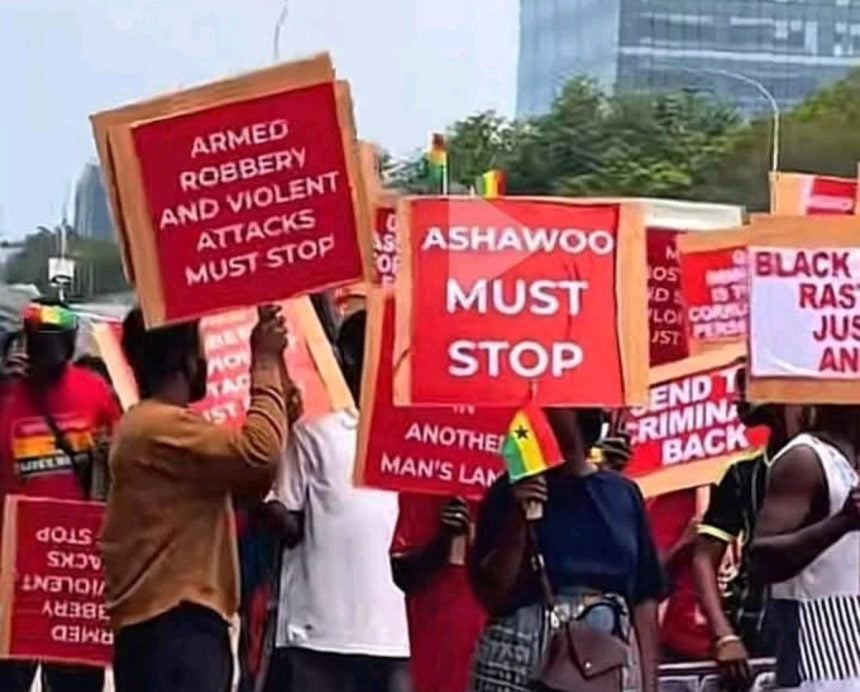
Tensions Rise as Large Demonstrations in Ghana Target Nigerian Community Amid Historical Grievances
Large demonstrations have erupted in Accra and other cities across Ghana described by some as retaliation for the historic “Ghana Must Go” deportations decades ago.
The recent protests focus on allegations against some Nigerians residing in Ghana, accusing them of criminal activities including robbery, ritual killings, and encroaching on local retail markets.
The protests, involving mostly local traders in the area known as Circle, feature placards with slogans such as “Nigerians must go” reflecting frustrations over perceived economic and social grievances. Demonstrators claim that some Nigerian merchants have violated Ghanaian laws, which restrict foreigners from engaging in certain forms of retail trade reserved for locals. Videos of the unrest circulated widely on social media, intensifying public and diplomatic attention.
In response, Nigerian diplomats have urged calm and restraint. Nigeria’s Foreign Minister Bianca Ojukwu who recently traveled to Ghana to discuss the issue with top officials reassured that although there are tensions. the situation is being managed and should not escalate into widespread conflict.
Ojukwu noted she did not witness violent acts like burning tires or overt hostility towards Nigerians during her visit emphasizing that the protests target a minority perceived to be responsible rather than Nigerians as a whole.
Both Ghanaian and Nigerian governments have called for peaceful dialogue and stressed the importance of protecting the rights and safety of all residents, including foreigners.
Ghanaian officials have reiterated their commitment to safeguarding all individuals in the country and warned against unlawful protests without proper police permits which some demonstrators lacked. Government representatives highlighted the need for law-abiding behavior among all communities to maintain social cohesion.
The protests reflect deeper economic and social tensions related to identity, trade, and historical memories on both sides.
Analysts observe that while these events recall the painful legacy of the “Ghana Must Go” expulsions of Nigerians in the early 1980s the current unrest is more complex involving economic grievances, fears over criminality and youth frustrations.
As diplomatic talks continue both countries emphasize the need to de-escalate tensions engage community leaders and find mutually respectful solutions to underlying issues to prevent further unrest.
Authorities in Ghana and Nigeria remain actively engaged promoting calm and cooperation amid ongoing efforts to address the economic and social drivers of discontent.
This situation underscores the sensitive nature of bilateral relations between the two West African neighbors who share a long history of migration, trade and cultural ties.
