
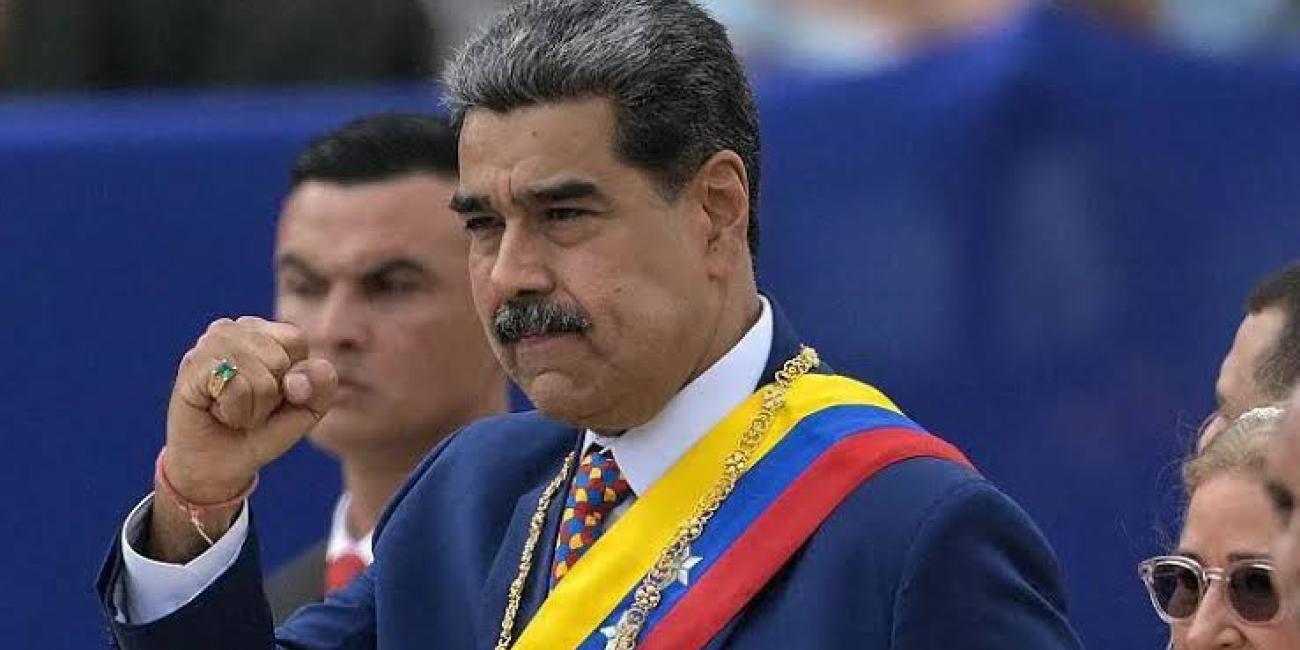
U.S. Doubles Bounty on Venezuela’s Maduro to $50M, Drawing Fierce Backlash from Caracas
The United States has doubled the reward for information leading to the arrest of Venezuelan President Nicolás Maduro from $25 million to an unprecedented $50 million (£37.2 million) surpassing the $25 million once offered for al-Qaeda leader Osama bin Laden after the 9/11 attacks.
Announcing the increase on Thursday, U.S. Attorney General Pam Bondi accused Maduro of being “directly linked to drug smuggling operations,” citing DEA seizures of 30 tons of cocaine connected to his network, including nearly seven tons allegedly tied to Maduro himself.
Bondi said the Venezuelan leader has worked closely with the Tren de Aragua gang, recently designated a terrorist organisation by Washington, and Mexico’s powerful Sinaloa Cartel.
Maduro, long labelled by U.S. officials as “one of the largest narco-traffickers in the world”, has faced years of sanctions and criminal indictments.
During Donald Trump’s first term, he was charged alongside senior aides with crimes including narco-terrorism, cocaine importation conspiracy, and weapons offences. A wanted poster released by the U.S. brands him a “designated global terrorist” and leader of the Cartel de los Soles.
The U.S. State Department reiterated its call for public assistance in “taking down Maduro and his cronies,” naming Diosdado Cabello Rondón and Vladimir Padrino López as key figures in the alleged network.
Caracas, however, dismissed the move as political theatre. Venezuelan Foreign Minister Yvan Gil blasted the announcement as “pathetic” and “ridiculous”, accusing Washington of staging a “desperate distraction” to mask its own scandals.
“The dignity of our homeland is not for sale,” Gil declared on Telegram. “We reject this crude propaganda operation.”
Maduro was first indicted on federal drug charges in 2020. The reward for his arrest began at $15 million under Trump, was increased to $25 million under Biden, and has now been doubled in what analysts see as part of Trump’s enduring foreign policy influence.
Despite the mounting pressure, Venezuela has vowed to resist what it calls U.S. interference in its internal affairs.
