
UK-Based Nigerian Delivers Constitution to Kemi Badenoch Over Citizenship Comment
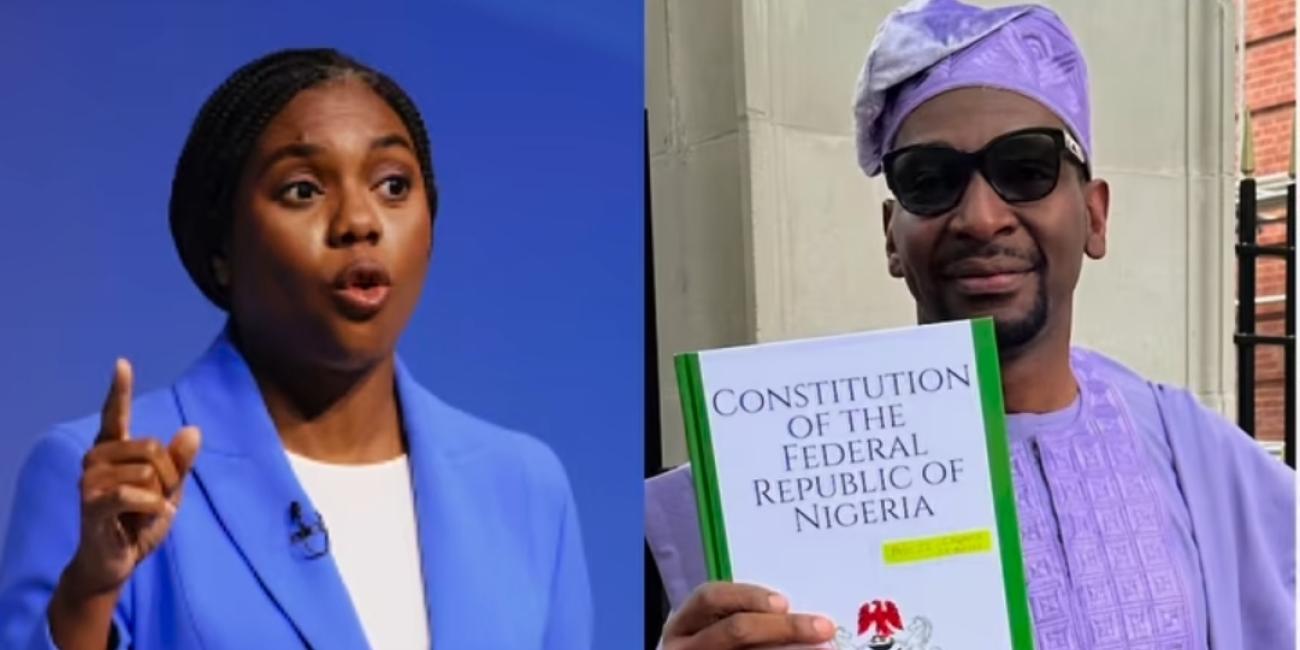
A UK-based Nigerian man, James Akinwande, has sparked online buzz after he personally delivered a copy of Nigeria’s 1999 Constitution to the London office of British Conservative leader Kemi Badenoch.
The symbolic gesture came in response to Badenoch’s controversial remarks suggesting that she cannot transmit Nigerian citizenship to her children because she is a woman.
In a video shared on Instagram, Akinwande is seen picking up the Constitution from the Nigerian High Commission in London before proceeding to Conservative Party headquarters in Whitehall to deliver the document.
“Nigerian Citizenship by Descent… A quick trip to the Nigeria High Commission, London… and then, Whitehall… Conservatives HQ,” he captioned the post, adding: “If you know, you know.”
According to Akinwande, the purpose of his action was to educate Badenoch on Section 25 of the Nigerian Constitution, which affirms that any child born outside Nigeria to either a Nigerian father or mother is entitled to citizenship by birth.
Badenoch, during a recent CNN interview with Fareed Zakaria, claimed she could not pass on her Nigerian citizenship to her children due to her gender. “It’s virtually impossible, for example, to get Nigerian citizenship. I had that citizenship by virtue of my parents. I can’t give it to my children because I’m a woman,” she said.
Her comments have drawn widespread backlash from Nigerians and legal experts, with many pointing to Section 25 of the Constitution that directly contradicts her claim.
Reacting to the statement, Bayo Onanuga, Special Adviser to President Bola Tinubu on Information and Strategy, criticized Badenoch and called for her to be “sent back home for proper re-education,” citing her lack of awareness of her country’s laws.
Badenoch, who previously served as the UK’s Trade Secretary (2022–2024), is no stranger to controversy. She has been criticized for her hardline views on immigration and multiculturalism.
In the same CNN interview, she alleged that some migrants to the UK exploit the asylum system by pretending to be gay or converting to Christianity to gain refugee status. She also denounced immigrants who try to “create mini-Nigerias” in Britain.
“These weren’t just Asian or Pakistani men. They were from a specific rural, mountainous part of Pakistan deeply detached even from most Pakistanis,” she said in reference to cultural clashes and grooming gang scandals. “And the result of our tolerance was the abuse of British children.”
Badenoch’s comments have been widely condemned as xenophobic and misinformed, particularly in light of her Nigerian heritage. Many observers believe her views reflect a broader shift within the UK Conservative Party toward stricter immigration rhetoric.
This incident highlights growing tension over identity, nationality, and misinformation both in the UK political arena and among members of the global Nigerian diaspora.
